Showing posts with label Networking / Security. Show all posts

Packt - Beginning OpenVPN 2.0.9

0 comments


Build and integrate Virtual Private Networks using OpenVPN

* A practical guide to using OpenVPN for building both basic and complex Virtual Private Networks (VPNs)
* Learn how to make use of OpenVPNs modules, high-end-encryption and how to combine it with servers for your individual privacy
* Advanced management of security certificates
* Get to know the new features of the forthcoming version 2.1 of OpenVPN

In Detail OpenVPN is a powerful, open source SSL VPN application. It can secure site-to-site connections, WiFi, and enterprise-scale remote connections. While being a full-featured VPN solution, OpenVPN is easy to use and does not suffer from the complexity that characterizes other IPsec VPN implementations. It uses the secure and stable TLS/SSL mechanisms for authentication and encryption. This book is an easy introduction to this popular VPN application. After introducing the basics of security and VPN, it moves on to cover using OpenVPN, from installing it on various platforms, through configuring basic tunnels, to more advanced features, such as using the application with firewalls, routers, proxy servers, and OpenVPN scripting.

This is a practical guide to using OpenVPN for building both basic and complex Virtual Private Networks. It will save you a lot of time and help you build better VPNs that suit your requirements. While providing only necessary theoretical background, the book takes a practical approach, presenting plenty of examples. It starts with an introduction into the theory of VPNs and OpenVPN, followed by a simple installation example on almost every available platform. After a concise and ordered list of OpenVPN's parameters, we dive into connecting several machines in a safe way. The last third of the book deals with professional and high-end scenarios, and also mobile integration. After having read the whole book and followed and understood all the examples, you will be an expert in VPN, Security, and especially in OpenVPN Technology.

What you will learn from this book?


* Install OpenVPN on Windows Server, Vista, and Mac OS X and also on different Linux versions and FreeBSD
* Learn basic security concepts necessary to understand VPNs and OpenVPN in particular
* Take a look at encryption matters, symmetric and asymmetric keying, and certificates
* Connect Windows and Linux systems and safely transfer the necessary encryption keys using WinSCP
* Learn about OpenVPN, its development, features, resources, advantages, and disadvantages compared to other VPN solutions, especially IPsec
* Discuss non-standard and advanced methods of installing OpenVPN by compiling the source code provided by the OpenVPN project
* Create an encryption key for OpenVPN and use it to set up an OpenVPN tunnel between two Windows systems in the same network
* Create X.509 server and client certificates for use with OpenVPN and learn how to use tools to debug and monitor VPN tunnels
* Create and administer certificates that have to be transferred to the machines that are supposed to take part in the VPN
* Configure two different firewall networks that connect to each other through the secure OpenVPN tunnel
* Install and use XCA and TinyCA2 to generate certificate revocation lists that are used to block unwanted connections by formerly authorized clients
* Install OpenVPN on Windows Mobile and Smartphones running embedded Linux, like Nokia's Maemo platform
* Analyze the flow of datagrams between the VPN servers and the connected networks with tools like ifconfig, ping, traceroute, and mtr

Approach

This book is an easy introduction to OpenVPN. While providing only necessary theoretical background, it takes a practical approach, presenting plenty of examples. It is written in a friendly style making this complex topic easy and a joy to read. It first covers basic VPN concepts, then moves to introduce basic OpenVPN configurations, before covering advanced uses of OpenVPN.

Who this book is written for?

This book is for both experienced and new OpenVPN users. If you are interested in security and privacy in the internet, or want to have your notebook or mobile phone connected safely to the internet, the server in your company, or at home, you will find this book useful. It presumes basic knowledge of Linux, but no knowledge of VPNs is required.

http://www.mediafire.com/?kk4gn9szt76iaej

Securing Wireless Communications At The Physical Layer

0 comments


The book focuses on a recently emerging topic in security. Specifically, the book focuses on physical layer security. Whereas conventional security mechanisms involve cryptography that operates at higher layers of the protocol stack, the methods described in this book secure communications at the physical layer.

The area of physical layer security is an emerging field of research that has seen an explosion of research in the past few years. This trend is only expected to continue as there is a growing need to secure wireless communications without conventional cryptographic network security protocols.

The proposed book will consist of contributions from roughly a dozen of the leading research groups in this emerging area. For the first time, important results will be collected together. Important topics will include the secrecy rate of MIMO wireless systems, practical codes for the dissemination of secrets, and authentication of wireless transmitters using waveform-level properties.

http://www.mediafire.com/?x7g085eppkr5a63

Graphs and Algorithms in Communication Networks

0 comments


Algorithmic discrete mathematics plays a key role in the development of information and communication technologies, and methods that arise in computer science, mathematics and operations research – in particular in algorithms, computational complexity, distributed computing and optimization – are vital to modern services such as mobile telephony, online banking and VoIP.

This book examines communication networking from a mathematical viewpoint. The contributing authors took part in the European COST action 293 – a four-year program of multidisciplinary research on this subject. In this book they offer introductory overviews and state-of-the-art assessments of current and future research in the fields of broadband, optical, wireless and ad hoc networks. Particular topics of interest are design, optimization, robustness and energy consumption.

The book will be of interest to graduate students, researchers and practitioners in the areas of networking, theoretical computer science, operations research, distributed computing and mathematics.
http://www.mediafire.com/?zi8s394zf92djvp

cisco press voice over ip security dec 2008

0 comments


VoIP security issues are becoming increasingly serious because voice networks and services cannot be protected from recent intelligent attacks and fraud by traditional systems such as firewalls and NAT alone. After analyzing threats and recent patterns of attacks and fraud, consideration needs to be given to the redesign of secure VoIP architectures with advanced protocols and intelligent products, such as Session Border Controller (SBC). Another type of security issue is how to implement lawful interception within complicated service architectures according to government requirements.

Voice over IP Security focuses on the analysis of current and future threats, the evaluation of security products, the methodologies of protection, and best practices for architecture design and service deployment. This book not only covers technology concepts and issues, but also provides detailed design solutions featuring current products and protocols so that you can deploy a secure VoIP service in the real world with confidence.

Voice over IP Security gives you everything you need to understand the latest security threats and design solutions to protect your VoIP network from fraud and security incidents.

Patrick Park has been working on product design, network architecture design, testing, and consulting for more than 10 years. Currently Patrick works for Cisco® as a VoIP test engineer focusing on security and interoperability testing of rich media collaboration gateways. Before Patrick joined Cisco, he worked for Covad Communications as a VoIP security engineer focusing on the design and deployment of secure network architectures and lawful interception (CALEA). Patrick graduated from the Pusan National University in South Korea, where he majored in computer engineering.

Understand the current and emerging threats to VoIP networks

Learn about the security profiles of VoIP protocols, including SIP, H.323, and MGCP

Evaluate well-known cryptographic algorithms such as DES, 3DES, AES, RAS, digital signature (DSA), and hash function (MD5, SHA, HMAC)

Analyze and simulate threats with negative testing tools

Secure VoIP services with SIP and other supplementary protocols

Eliminate security issues on the VoIP network border by deploying an SBC

Configure enterprise devices, including firewalls, Cisco Unified Communications Manager, Cisco Unified Communications Manager Express, IP phones, and multilayer switches to secure VoIP network traffic

Implement lawful interception into VoIP service environments

This IP communications book is part of the Cisco Press® Networking Technology Series

http://www.mediafire.com/?izn5zydka2m

Cisco Press 31 Days Before Your CCNA Exam 2nd Edition

0 comments


31 Days Before your CCNA Exam, Second Edition, offers you a personable and practical way to understand the certification process, commit to taking the exam, and finish your preparation using a variety of Foundational and Supplemental study resources.


The book breaks down key exam topics into 31 daily review

sessions using short summaries, lists, tables, examples, and graphics. A Study Resources section provides you with a quick reference for locating more in-depth treatment of a day’s topics within the relevant Foundational and Supplemental resources.

Use this day-by-day guide to organize, prepare, and review all the CCNA® objectives. The features of the book empower you to fit exam preparation into an otherwise busy schedule:

* Tear out visual calendar summarizes each day’s study topics
* Checklist highlights important tasks and deadlines leading up to your exam
* Description of the 640-802 CCNA exam organization and sign up process, includes how to use a voucher
* Strategies from the author help you to be mentally, organizationally, and physically prepared for exam day
* Conversational tone, making your study time more enjoyable
http://www.mediafire.com/?ynty1zhnzz4

Packt - Building Telephony Systems with OpenSIPS 1.6 2010

0 comments


SIP is the most important VoIP protocol and OpenSIPS is clearly the open source leader in VoIP platforms based on pure SIP. The whole telecommunication industry is changing to an IP environment, and telephony in the way we know today will disappear in less than ten years. SIP is the protocol leading this disruptive revolution and it is one of the main protocols on next-generation networks. While a VoIP provider is not the only kind of SIP infrastructure created using OpenSIPS, it is certainly one of the most difficult to implement.

This book will give you a competitive edge by helping you to create a SIP infrastructure capable of handling tens of thousands of subscribers. You can extend the examples given in this book easily to other applications such as a SIP router, load balancing, IP PBX, and Hosted PBX as well. This book is an update of the title Building Telephony Systems with OpenSER.

The book starts with the simplest configuration and evolves chapter by chapter teaching you how to add new features and modules. It will first teach you the basic concepts of SIP and SIP routing. Then, you will start applying the theory by installing OpenSIPS and creating the configuration file. You will learn about features such as authentication, PSTN connectivity, user portals, media server integration, billing, NAT traversal, and monitoring. The book uses a fictional VoIP provider to explain OpenSIPS. The idea is to have a simple but complete running VoIP provider by the end of the book.

A practical guide to building an efficient SIP telephony system


What you will learn from this book :


* Identify how SIP transactions are routed including initial and sequential requests
* Accelerate the processing of SIP sequential requests with the help of Loose Routing
* Install OpenSIPS in a Linux platform and integrate a media server such as Asterisk
* Acquire authentication and persistency by enabling a MySQL back-end for OpenSIPS
* Administer the server with the help of graphical web interfaces such as OpenSIPS control panel and serMyAdmin
* Connect to a PSTN gateway to send and receive calls
* Enable dynamic dial plans and routing by using the DIALPLAN module DROUTING module
* Traverse NAT using STUN and TURN
* Bill your costumers or simply check your expenses by generating CDRs (Call Detail Records)
* Monitor your SIP infrastructure to keep it running smoothly

http://www.mediafire.com/?twddmy5nqzd

TCPIP Sockets in Java, 2nd Edition

0 comments


The networking capabilities of the Java platform have been extended considerably since the first edition of the book. This new edition covers version 1.5-1.7, the most current iterations, as well as making the following improvements:

The API (application programming interface) reference sections in each chapter, which describe the relevant parts of each class, have been replaced with (i) a summary section that lists the classes and methods used in the code, and (ii) a ?gotchas? section that mentions nonobvious or poorly-documented aspects of the objects.

In addition, the book covers several new classes and capabilities introduced in the last few revisions of the Java platform. New abstractions to be covered include NetworkInterface, InterfaceAddress, Inet4/6Address, SocketAddress/InetSocketAddress, Executor, and others; extended access to low-level network information; support for IPv6; more complete access to socket options; and scalable I/O. The example code is also modified to take advantage of new language features such as annotations, enumerations, as well as generics and implicit iterators where appropriate.

Most Internet applications use sockets to implement network communication protocols. This book’s focused, tutorial-based approach helps the reader master the tasks and techniques essential to virtually all client-server projects using sockets in Java. Chapter 1 provides a genral overview of networking concepts to allow readers to synchronize the concepts with terminology. Chapter 2 introduces the mechanics of simple clients and servers. Chapter 3 covers basic message construction and parsing. Chapter 4 then deals with techniques used to build more robust clients and servers. Chapter 5 (NEW) introduces the scalable interface facilities which were introduced in Java 1.5, including the buffer and channel abstractions. Chapter 6 discusses the relationship between the programming constructs and the underlying protocol implementations in more detail. Programming concepts are introduced through simple program examples accompanied by line-by-line code commentary that describes the purpose of every part of the program. The book’s Web site contains many examples of command-based sockets-related code discussed throughout the book. No other resource presents so concisely or so effectively the material necessary to get up and running with Java sockets programming.

KEY FEATURES

* Focused, tutorial-based instruction in key sockets programming techniques allows reader to quickly come up to speed on Java applications.
* Concise and up-to-date coverage of the most recent platform (1.7) for Java
applications in networking technology
* Provides code for all example programs via a companion Web site to let the reader see the important objects and methods in context and to understand the purpose of each line of code.

http://www.mediafire.com/?nzzdwqgazgz

Academic Press Multimedia over IP and Wireless Networks

0 comments

This all-inclusive, expertly structured contributed volume will serve as an indispensable guide for professionals or researchers working in areas like networking, communications, data compression, multimedia processing, streaming architectures, and computer graphics. Beginning with a concise overview of the fundamental principles and challenges of multimedia communication and networking, this book then branches off organically to tackle compression and networking next before moving on to systems, wireless multimedia and more advanced topics.

The Compression section advises on the best means and methodology to ensure multimedia signal (images, text, audio and data) integrity for transmissions on wireless and wired systems. The Networking section addresses channel protection and performance. In the Systems section the focus is on streaming media on demand, live broadcast and video and voice's role in real-time communication. Wireless multimedia transmission and Quality of Service issues are discussed in the Wireless Multimedia section. An Advanced Topics section concludes the book with an assortment of topics including Peer-to-Peer multimedia communication and multipath networks.

* Up-to-date coverage of existing standards for multimedia networking
* Synergistic tutorial approach reinforces knowledge gained in previous chapters
* Balanced treatment of audio and video with coverage of end-to-end systems
http://www.mediafire.com/?jywjmnjmif2

Security and Privacy in Mobile Information and Communication Systems

0 comments


MobiSec 2009 was the first ICST conference on security and privacy in mobile information and communication systems. With the the vast area of mobile technology research and application, the intention behind the creation of MobiSec was to make a small, but unique contribution to build a bridge between top-level research and large scale application of novel kinds of information security for mobile devices and communication.

The papers at MobiSec 2009 dealt with a broad variety of subjects ranging from issues of trust in and security of mobile devices and embedded hardware security, over efficient cryptography for resource-restricted platforms, to advanced applications such as wireless sensor networks, user authentication, and privacy in an environment of autonomously communicating objects. With hindsight a leitmotif emerged from these contributions, which corrobarated the idea behind MobiSec; a set of powerful tools have been created in various branches of the security discipline, which await combined application to build trust and security into mobile (that is, all future) networks, autonomous and personal devices, and pervasive applications

http://www.mediafire.com/?jiynittzjum

Microsoft Press Microsoft Exchange Server 2010 Administrator's Pocket Consultant

0 comments


Portable and precise, this pocket-sized guide delivers immediate answers for the day-to-day administration of Exchange Server 2010. Zero in on core support and maintenance tasks using quick-reference tables, instructions, and lists. You’ll get the focused information you need to solve problems and get the job done—whether you’re at your desk or in the field!

Get fast facts to:

* Configure and manage Exchange clients
* Set up users, contacts, distribution lists, and address books
* Administer permissions, rules, policies, and security settings
* Manage databases and storage groups
* Optimize message processing, logging, and anti-spam filtering
* Administer at the command line using Exchange Management Shell
* Configure SMTP, connectors, links, and Edge subscriptions
* Manage mobile device features and client access
* Back up and restore systems
http://www.mediafire.com/?nzbnmzyto2m

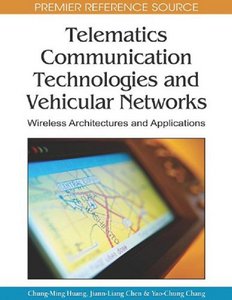
Telematics Communication Technologies and Vehicular Networks 2009

0 comments


Telematics Communication Technologies and Vehicular Networks: Wireless Architectures and Applications examines critical issues involved with telematics such as vehicular network infrastructure, vehicular network communication protocols, and vehicular services and applications. This highly esteemed reference publication provides useful techniques, tools, and assessments for those involved with vehicular networks.

http://www.mediafire.com/?im2xhymyyqm

Wiley - Systems Engineering in Wireless Communications 2009

0 comments

This book provides the reader with a complete coverage of radio resource management for 3G wireless communications

Systems Engineering in Wireless Communications focuses on the area of radio resource management in third generation wireless communication systems from a systems engineering perspective. The authors provide an introduction into cellular radio systems as well as a review of radio resource management issues. Additionally, a detailed discussion of power control, handover, admission control, smart antennas, joint optimization of different radio resources , and cognitive radio networksis offered. This book differs from books currently available, with its emphasis on the dynamical issues arising from mobile nodes in the network. Well-known control techniques, such as least squares estimation, PID control, Kalman filers, adaptive control, and fuzzy logic are used throughout the book.

Key Features:

* Covers radio resource management of third generation wireless communication systems at a systems level
* First book to address wireless communications issues using systems engineering methods
* Offers the latest research activity in the field of wireless communications, extending to the control engineering community
* Includes an accompanying website containing MATLAB™/SIMULINK™ exercises
* Provides illustrations of wireless networks

This book will be a valuable reference for graduate and postgraduate students studying wireless communications and control engineering courses, and R&D engineers.

http://www.mediafire.com/?nzmzyhymzam

Wireless Sensor Networks A Networking Perspective (2009)

0 comments


This book provides a comprehensive and systematic introduction to the fundamental concepts, major challenges, and effective solutions in wireless sensor networking (WSN). Distinguished from other books, it focuses on the networking aspects of WSNs and covers the most important networking issues, including network architecture design, medium access control, routing and data dissemination, node clustering, node localization, query processing, data aggregation, transport and quality of service, time synchronization, network security, and sensor network standards.

With contributions from internationally renowned researchers, Wireless Sensor Networks expertly strikes a balance between fundamental concepts and state-of-the-art technologies, providing readers with unprecedented insights into WSNs from a networking perspective. It is essential reading for a broad audience, including academic researchers, research engineers, and practitioners in industry. It is also suitable as a textbook or supplementary reading for electrical engineering, computer engineering, and computer science courses at the graduate level.

http://www.mediafire.com/?dmzzmdeqfy3

Wiley - Wireless All In One For Dummies 2nd Edition

0 comments

Link up, connect, or create a network-with no wires attached!

With such an amazing abundance of electronic devices available in our daily lives, wouldn't it be nice to eliminate getting wrangled by all those wires? With this guide by your side, a team of technical authors walks you through creating a network in your home or office-without the expense and hassle of stringing cable or paying a network administrator.

Eight self-contained minibooks answer your questions about wireless devices and wireless networks and address everything from hardware security to wireless hobbies and GPS. Clear, step-by-step instructions show you how to link your TV, computers, PDAs, laptops, TiVo, and sound systems to your wireless network.

* Discover how to configure networks and create a completely wireless environment
* Incorporate various hardware into your wireless network, such as notebook computers, handheld devices, sound systems, and printers
* Tackle common security issues and best troubleshooting practices
* Learn all the basics of wireless computing and how to make it work for you

With this book, it's easier than ever to to create an office or home network on a Windows platform. Don't be a bird on a wire-become a part of a wireless world!

Read more: http://www.dummies.com/store/product/Wireless-All-In-One-For-Dummies-2nd-Edition.productCd-0470490136,navId-322463,descCd-description.html#ixzz0qM6ySCgL

http://www.mediafire.com/?jd2jjmdmk5t

TCP-IP for Dummies 6th Edition

0 comments


Packed with the latest information on TCP/IP standards and protocols

TCP/IP is a hot topic, because it's the glue that holds the Internet and the Web together, and network administrators need to stay on top of the latest developments. TCP/IP For Dummies, 6th Edition, is both an introduction to the basics for beginners as well as the perfect go-to resource for TCP/IP veterans.

The book includes the latest on Web protocols and new hardware, plus very timely information on how TCP/IP secures connectivity for blogging, vlogging, photoblogging, and social networking. Step-by-step instructions show you how to install and set up TCP/IP on clients and servers; build security with encryption, authentication, digital certificates, and signatures; handle new voice and mobile technologies, and much more.

* Transmission Control Protocol / Internet Protocol (TCP/IP) is the de facto standard transmission medium worldwide for computer-to-computer communications; intranets, private internets, and the Internet are all built on TCP/IP
* The book shows you how to install and configure TCP/IP and its applications on clients and servers; explains intranets, extranets, and virtual private networks (VPNs); provides step-by-step information on building and enforcing security; and covers all the newest protocols
* You'll learn how to use encryption, authentication, digital certificates, and signatures to set up a secure Internet credit card transaction

Find practical security tips, a Quick Start Security Guide, and still more in this practical guide.

Introduction.


Part I: TCP/IP from Names to Addresses.


Chapter 1: Understanding TCP/IP Basics.

Chapter 2: Layering TCP/IP Protocols.

Chapter 3: Serving Up Clients and Servers.

Chapter 4: Nice Names and Appetizing Addresses.

Chapter 5: Need More Addresses? Try Subnetting and NAT.

Part II: Getting Connected.

Chapter 6: Confi guring a TCP/IP Network — the Software Side.

Chapter 7: Networking SOHO with Wireless.

Chapter 8: Advancing into Routing Protocols.

Chapter 9: IPv6: IP on Steroids.

Chapter 10: Serving Up DNS (The Domain Name System).

Part III: Configuring Clients and Servers: Web, E-Mail, and Chat.

Chapter 11: Digesting Web Clients and Servers.

Chapter 12: Minimum Security Facilities.

Chapter 13: Eating Up E-Mail.

Chapter 14: Securing E-Mail.

Chapter 15: Beyond E-Mail: Social Networking and Online Communities.

Part IV: Even More TCP/IP Applications and Services.


Chapter 16: Mobile IP — The Moveable Feast.

Chapter 17: Saving Money with VoIP (Voice Over Internet Protocol).

Chapter 18: File and Print Sharing Services.

Chapter 19: Sharing Compute Power.

Part V: Network Troubleshooting and Security.

Chapter 20: Staying with Security Protocols.

Chapter 21: Relishing More Meaty Security.

Chapter 22: Troubleshooting Connectivity and Performance Problems.

Part VI: The Part of Tens.

Chapter 23: Ten More Uses for TCP/IP.

Chapter 24: Ten More Resources for Information about TCP/IP Security.

Index.
http://www.mediafire.com/?mz1notzmdz0
0 comments


IT professionals who want to move into the networking side in a corporate or enterprise setting will find the detailed content they need to get up to speed on the very latest networking technologies; plus, current networking professionals will find this a valuable and up-to-date resource. This hands-on guide is designed so that you can select, design, and implement an actual network using the tutorials and steps in the book. Coverage includes an overview of networking technologies, including the hardware, software, transmission media, and data transfer processes; in-depth coverage of OSI and TCP/IP reference models; operating systems and other systems software used in today s networks; LANs, WANS, and MANs, including the components and standards that operate within each type of area network; and more.

Part I: Networking Nuts and Bolts.

1. Introduction to Networking.

2. LANs, WANs, and MANs.

3. Network Hardware and Transmission Media.

4. Operating Systems and Networking Software.

5. The TCP/IP Protocol Suite.

6. Ethernet Concepts.

7. Not To Be Forgotten.

Part II: The OSI Layers.


8. The Upper Layers.

9. The Transport Layer.

10. The Network Layer.

11. The Data Link Layer.

Part III: Network Design and Implementation.


12. Design Methodologies.

13. Implementation.

Part IV: Managing and Maintaining the Network.

14. Network Security.

15. Network Management.

16. Troubleshooting.

A. Additional Exercises.

B. Exercise Answers.

C. Glossary.

D. Acronyms.
http://www.mediafire.com/?hnk2uiqluyn

Wiley.Networking.Bible.Sep.2009

0 comments

Everything you need to set up and maintain large or small networks

Barrie Sosinsky

Networking Bible

Create a secure network for home or enterprise

Learn basic building blocks and standards

Set up for broadcasting, streaming, and more

The book you need to succeed!

Your A-Z guide to networking essentials

Whether you're setting up a global infrastructure or just networking two computers at home, understanding of every part of the process is crucial to the ultimate success of your system. This comprehensive book is your complete, step-by-step guide to networking—from different architectures and hardware to security, diagnostics, Web services, and much more. Packed with practical, professional techniques and the very latest information, this is the go-to resource you need to succeed.

*

Demystify the basics: network stacks, bus architectures, mapping, and bandwidth
*

Get up to speed on servers, interfaces, routers, and other necessary hardware
*

Explore LANs, WANs, Wi-Fi, TCP/IP, and other types of networks
*

Set up domains, directory services, file services, caching, and mail protocols
*

Enable broadcasting, multicasting, and streaming media
*

Deploy VPNs, firewalls, encryption, and other security methods
*

Perform diagnostics and troubleshoot your systems

http://www.mediafire.com/?z2dyjzzjodw

Data Communication and Networking - Forouzan

0 comments

As one of the fastest growing technologies in our culture today, data communications and networking presents a unique challenge for instructors. As both the number and types of students are increasing, it is essential to have a textbook that provides coverage of the latest advances, while presenting the material in a way that is accessible to students with little or no background in the field. Using a bottom-up approach, Data Communications and Networking presents this highly technical subject matter without relying on complex formulas by using a strong pedagogical approach supported by more than 700 figures.

Now in its Fourth Edition, this textbook brings the beginning student right to the forefront of the latest advances in the field, while presenting the fundamentals in a clear, straightforward manner. Students will find better coverage, improved figures and better explanations on cutting-edge material. The "bottom-up" approach allows instructors to cover the material in one course, rather than having separate courses on data communications and networking.

http://www.mediafire.com/?zo1qdnwohid

Firewall

0 comments
Slides Contains the basic information about the firewalls.

Download PPT

Book:-
Firewall Fundamentals Publisher:Cisco Press

Download Ebook


SSH, The Secure Shell - The Definitive Guide (2001)

0 comments
This book covers Unix,Windows, and Macintosh implementations of SSH. It shows both system
administrators and end users how to install, maintain, and troubleshoot SSH

http://www.mediafire.com/?y12w3uzvm55
 
Copyright © Download Free Ebooks